Metal Turned Parts sit inside products that rarely attract attention: a stainless-steel valve stem, a brass connector, or a small shaft with a carefully controlled diameter. Yet a minor machining deviation can disrupt assembly, increase scrap, or delay an entire production run. For global buyers, choosing a supplier means looking beyond a polished website and a low unit price. Material capability, tolerance control, inspection records, communication, and delivery performance all deserve scrutiny.
Workforce capacity matters, too. Deloitte and The Manufacturing Institute estimated in a 2024 report that U.S. manufacturing could need 3.8 million workers between 2024 and 2033, with 1.9 million jobs potentially unfilled. That projection concerns the wider manufacturing sector, not turned-parts suppliers alone. Still, it highlights why buyers should ask who will run production, maintain quality checks, and respond when demand changes. Details count.
This guide compares ten suppliers for international buyers, focusing on practical factors such as machining range, quality systems, materials, and export experience. No ranking can fit every project. A supplier suited to millions of simple pins may struggle with short-run, tight-tolerance components. And a familiar certification is not proof of consistent performance. Treat this list as a starting point; confirm capabilities with drawings, sample parts, and current quality documentation before committing.
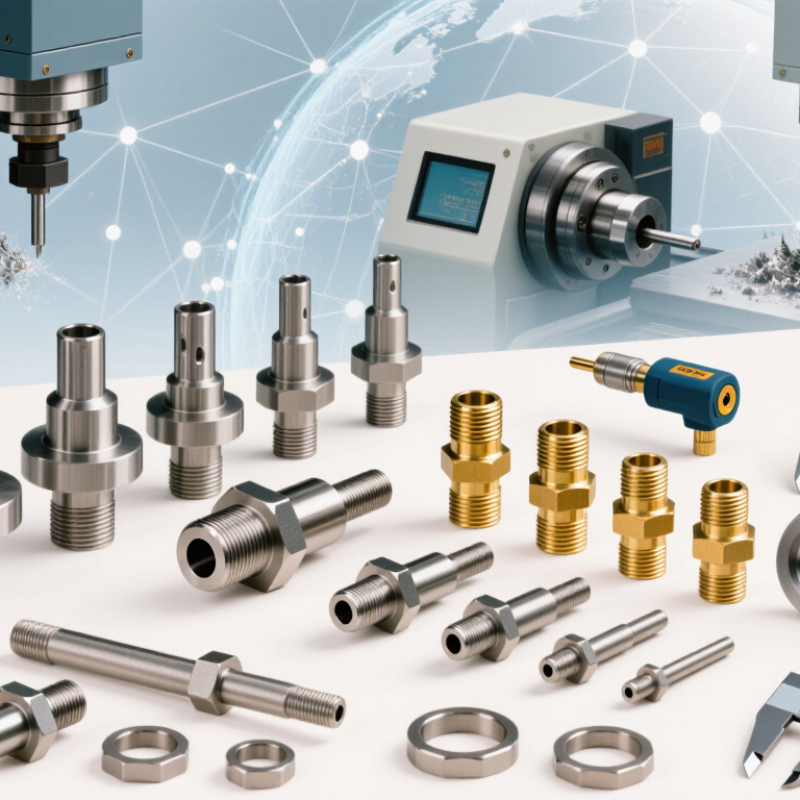
Metal turned parts are cylindrical components shaped as metal stock rotates against a cutting tool. Common examples include shafts, bushings, pins, spacers, and threaded fittings. Their shoulders, grooves, holes, and tapers are cut to match a drawing. Small details matter. A groove only a fraction too wide can affect how a part seats in an assembly.
Production often begins with round bar stock, cut to a workable length and held in a lathe or CNC turning machine. The spindle rotates the material while tools remove metal in controlled passes. Depending on the design, additional steps may include drilling, threading, knurling, or milling flat surfaces. Cutting fluid helps manage heat and clear chips. The finished part is then deburred and inspected for dimensions, surface finish, and visible defects.
The drawing guides the process, but it can still leave room for interpretation. A specified diameter is useful; clear tolerances and material requirements are better. Inspection may use micrometers, gauges, or coordinate-measuring equipment, depending on the part and required precision. Not every cut is perfect. That is why buyers should clarify critical dimensions, production quantities, and inspection expectations before ordering. A sample can reveal practical issues that a drawing alone may not show.
Metal turned parts are components made by rotating a workpiece against cutting tools to remove material and create features such as diameters, grooves, threads, and bores. They are commonly produced on manual lathes, CNC lathes, or Swiss-type machines. A typical workflow includes material selection, cutting stock to length, turning and drilling, deburring, inspection, and—when specified—finishing or heat treatment.
The entries below are supplier-profile archetypes for comparing manufacturing options, not named or ranked companies. Capabilities, tolerances, minimum orders, and lead times vary by part design and supplier; confirm them with a drawing-based quotation.
| No. | Supplier Profile | Typical Processes | Common Materials | Often Suited To | Buyer Checks |
|---|---|---|---|---|---|
| 1 | Swiss-Type Turning Specialist | Guide-bushing turning, simultaneous machining, bar feeding | Stainless steel, brass, aluminum, alloy steels | Small-diameter, slender, or intricate precision parts | Maximum bar diameter, feature access, inspection method, and lot size |
| 2 | CNC Turning Job Shop | CNC turning, facing, boring, grooving, threading | Aluminum, brass, carbon steel, stainless steel, plastics | Prototypes, replacement parts, and varied low-to-medium volumes | Machine envelope, programming approach, setup charges, and revision control |
| 3 | High-Volume Bar-Turning Producer | Automatic bar feeding, CNC turning, in-process gauging | Brass, aluminum, free-machining steels, stainless grades | Repeat orders and parts designed for efficient bar-stock production | Annual capacity, minimum order quantity, material traceability, and scrap controls |
| 4 | Turn-Mill Supplier | Turning with live-tool milling, cross-drilling, and secondary features | Aluminum, stainless steel, alloy steel, brass | Parts combining turned surfaces with flats, holes, or milled details | Required axes, feature tolerances, datum strategy, and first-article report |
| 5 | Large-Part CNC Turning Shop | Chuck or between-centers turning, boring, facing, threading | Carbon steel, alloy steel, stainless steel, aluminum | Larger shafts, rollers, sleeves, and flanged components | Maximum diameter and length, lifting capacity, runout controls, and packing |
| 6 | Precision Threaded-Component Supplier | External and internal threading, thread rolling where applicable, gauging | Steel, stainless steel, brass, aluminum | Studs, fittings, threaded inserts, and custom fastener-like parts | Thread standard, class or tolerance, gauge records, and coating allowance |
| 7 | Prototype and Short-Run Machining Supplier | CNC turning, manual finishing, design-for-manufacture feedback | Common engineering metals and machinable plastics | Samples, pilot builds, and engineering changes | Prototype lead time, material certification, inspection scope, and repeatability plan |
| 8 | Turned-Part Supplier with Finishing Partners | Turning plus outsourced or in-house plating, anodizing, or passivation | Aluminum, carbon steel, stainless steel, brass | Components requiring specified appearance or surface protection | Finish specification, masking, dimensional impact, certificates, and subcontractor control |
| 9 | Industry-Controlled Production Supplier | CNC turning with documented inspection and controlled production records | Specified grades of steel, stainless steel, aluminum, and other approved metals | Applications with formal quality, traceability, or regulatory requirements | Relevant certifications, scope, calibration records, traceability, and audit requirements |
| 10 | Integrated Machining and Assembly Supplier | Turning, secondary machining, component sourcing, and assembly | Part-specific metals and compatible purchased components | Finished subassemblies and consolidated sourcing programs | Assembly responsibility, supplier controls, testing, packaging, and change management |
Tolerance capability is feature-, material-, and process-dependent; specify required dimensions and geometric tolerances on the part drawing rather than relying on a general machining claim.
They are cylindrical components shaped by rotating metal stock against a cutting tool. Examples include shafts, bushings, pins, and spacers.
Round bar stock is cut to length and held in a lathe or CNC turning machine. The spinning stock is shaped through controlled cutting passes.
It can produce shoulders, grooves, holes, tapers, and threads. Some designs also need knurling or milled flat surfaces.
A groove slightly too wide can affect how a part seats in an assembly. Small details matter.
Inspection may use micrometers, gauges, or coordinate-measuring equipment. Parts are checked for dimensions, surface finish, and visible defects.
Confirm critical dimensions, tolerances, material requirements, production quantity, and inspection expectations. A drawing can leave room for interpretation.
Compare turning specialties, materials, stated tolerances, inspection methods, and sample results. Machine counts alone prove little.
A sample can expose practical issues that a drawing misses. An inspection report shows measured results, though one report cannot prove every batch will match.
This article explains what Metal Turned Parts are, how they are produced through precision machining, and why they are used in a wide range of industrial applications. It outlines the factors global buyers can use to assess suppliers, including manufacturing capabilities, material options, quality controls, communication, production capacity, and delivery performance. The article also profiles ten suppliers, offering a framework for understanding how their services and strengths may differ without relying on a single selection criterion.
A practical comparison of capabilities, quality, and lead times helps buyers create a shortlist suited to their project requirements. The final section describes ways to verify a potential supplier across borders, such as reviewing relevant documentation, confirming technical specifications, discussing inspection procedures, and agreeing on timelines and communication processes. Together, these considerations can help buyers make informed sourcing decisions and build reliable supplier relationships.

 Jifeilong