China Top 10 Iron Parts Manufacturers for Global Buyers

Time:2026-09-10 Author:Aria
0%

China’s iron parts manufacturing sector serves global buyers across construction, machinery, transportation, furniture, and industrial equipment. This guide introduces ten manufacturers with experience in casting, forging, machining, stamping, and customized production. Their capabilities may differ widely, so buyers should examine more than product photographs.

The selection considers production equipment, material control, dimensional accuracy, quality systems, export experience, and communication practices. Factory visits, sample reviews, and third-party inspection can reveal details that brochures often miss. A reliable supplier should explain iron grades, heat treatment, surface finishing, tolerances, packaging, and traceability in clear terms. Ask for inspection records.

Some manufacturers may excel at large castings, while others focus on small precision components. One factory might offer competitive pricing but require closer supervision during development. Another may provide stronger engineering support but have higher minimum order quantities. These differences matter when purchasing Iron Parts for demanding applications.

This overview is designed as a practical starting point, not a final purchasing decision. Supplier rankings can change with equipment upgrades, management changes, and market conditions. Even experienced buyers should verify current certifications, production capacity, lead times, and compliance documents. A polished sample is not enough.

Real reliability appears during repeated orders, engineering changes, and shipment preparation. Buyers should compare drawings, samples, quotations, and test results before signing agreements. Careful evaluation reduces avoidable delays and helps match each manufacturer with the right project. That process takes time. It is worth it.
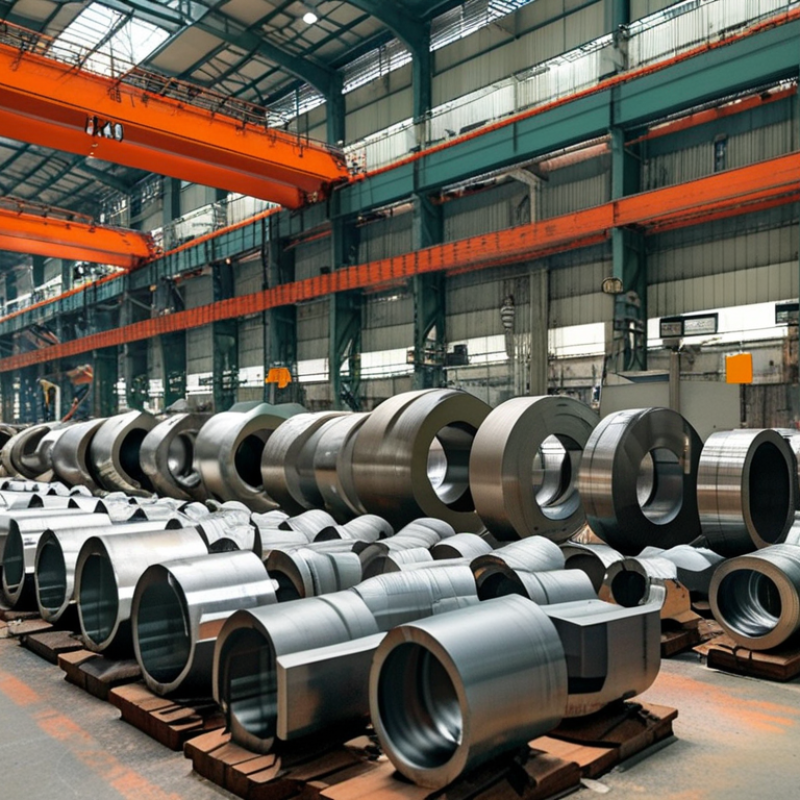
China Top 10 Iron Parts Manufacturers for Global Buyers

What Defines a Top Iron Parts Manufacturer for Global Buyers

China Top 10 Iron Parts Manufacturers for Global Buyers

What Defines a Top Iron Parts Manufacturer for Global Buyers

A top iron parts manufacturer combines foundry experience with disciplined daily control. Skilled engineers review drawings, load conditions, tolerances, and surface requirements before production begins. They understand that a small casting defect can stop an entire assembly line. Practical knowledge matters here.

Reliable factories use controlled melting, mold preparation, heat treatment, and machining procedures. They test chemical composition, hardness, dimensions, and tensile performance when required. Inspection records should connect each batch to materials, operators, and production dates. Clear traceability builds confidence during international purchasing.

Communication is equally important. Strong suppliers confirm technical details instead of guessing. They provide realistic lead times, packaging plans, and inspection reports. A factory visit may reveal clean work areas, calibrated measuring tools, and organized storage. It may also reveal problems.

No factory is flawless. I have seen excellent samples followed by uneven production. That is why buyers should check repeatability, not only first-article quality. Independent inspections can expose missed tolerances, weak packaging, or incomplete documents before shipment. Small details matter. A dependable manufacturer accepts questions, explains limitations, and improves its process after a mistake.

China Top 10 Iron Parts Manufacturers for Global Buyers - What Defines a Top Iron Parts Manufacturer for Global Buyers

Anonymous capability benchmark for evaluating Chinese iron parts suppliers

Rank Anonymous Manufacturer Profile Primary Iron Process Common Material Grades Typical Casting Weight Dimensional Control Quality Evidence Expected Inspection Equipment Export-Readiness Indicator Best-Fit Buyer Requirement
1 Profile A — High-volume ductile iron specialist Automated green-sand molding EN-GJS-400-15; ASTM A536 60-40-18 5–80 kg per casting ISO 8062 CT8–CT10, subject to drawing ISO 9001; material certificates; tensile and hardness reports CMM, spectrometer, tensile tester, Brinell tester Lot traceability and export packing procedures Automotive, agricultural and hydraulic components
2 Profile B — Precision gray iron producer Resin-bonded and green-sand molding EN-GJL-250; ASTM A48 Class 40 2–60 kg per casting ISO 8062 CT8–CT10; machining to drawing tolerances Chemical analysis, hardness mapping and first-article inspection CMM, surface roughness tester, spectrometer PPAP-style documentation available on request Machine bases, pump bodies and industrial housings
3 Profile C — Large ductile iron foundry Resin sand casting EN-GJS-500-7; ASTM A536 80-55-06 80–1,500 kg per casting ISO 8062 CT10–CT12 for heavy castings Ultrasonic testing, radiography or magnetic-particle testing where specified Portable CMM, UT equipment, spectrometer Heavy-load lifting, seaworthy packing and container loading controls Mining, energy, construction and heavy machinery
4 Profile D — Investment and shell-mold iron supplier Shell molding and precision sand casting Ductile iron and alloyed gray iron grades to customer specification 0.2–25 kg per casting Typical CT7–CT9 for suitable geometries Dimensional reports, metallography and leak testing where applicable Optical measurement system, CMM, metallurgical microscope Small-part sorting, barcode traceability and consolidated shipments Complex small iron parts and repeat-production programs
5 Profile E — Machining-integrated iron parts supplier Sand casting with CNC machining Gray iron and ductile iron grades defined by EN, ASTM or customer standards 1–250 kg per casting Machined features commonly controlled to ±0.05–±0.10 mm, depending on feature FAI, gauge calibration, process capability and inspection plans CMM, height gauge, roundness tester and calibrated gauges Single purchase order covering casting, machining and finishing Ready-to-install industrial parts
6 Profile F — Hydraulic and pressure-retaining component producer High-integrity ductile iron casting EN-GJS-400-15 to EN-GJS-600-3; ASTM-equivalent grades 0.5–150 kg per casting Drawing-specific tolerances with pressure-test controls Leak testing, radiography or magnetic-particle testing when specified Pressure-test bench, CMM, spectrometer and hardness tester Full batch records and controlled sealing-surface inspection Valve bodies, manifolds, pump casings and fittings
7 Profile G — Agricultural and construction parts supplier Mechanized sand casting Wear-resistant gray iron and ductile iron grades 3–120 kg per casting ISO 8062 CT9–CT11, depending on geometry and size Hardness, microstructure, visual and dimensional inspection Hardness tester, spectrometer, gauges and profile projector Batch production planning and corrosion-protected export packaging Brackets, housings, hubs and structural machinery parts
8 Profile H — Prototype and low-volume foundry Manual sand casting and 3D-printed patterns Gray iron and ductile iron to approved material specification 0.1–300 kg per casting Prototype-level control; final limits set by drawing and inspection plan Material certificates, sample inspection and nonconformance reporting Portable CMM, gauges, spectrometer and visual inspection tools Fast quotation, engineering feedback and mixed-SKU consolidation New product development and replacement parts
9 Profile I — Surface-finished iron components supplier Sand casting with machining and coating Gray iron and ductile iron with customer-approved coating systems 1–100 kg per casting Machined features to drawing; coating thickness recorded by batch Coating thickness, adhesion, salt-spray or corrosion tests when required Coating thickness gauge, CMM, roughness tester and gauges Moisture-resistant packaging and documented finishing process Outdoor equipment and corrosion-sensitive assemblies
10 Profile J — Cost-optimized standard iron parts producer Green-sand casting with batch machining Standard gray iron and ductile iron grades 0.5–50 kg per casting ISO 8062 CT10–CT12 for as-cast features Chemical analysis, visual inspection and sampling-based dimensional reports Calibrated gauges, hardness tester and spectrometer Competitive tooling, carton or pallet packing and standard export documents High-volume, non-critical industrial components
Buyer verification note: The capability ranges above are industry benchmark ranges rather than claims about any named company. Buyers should verify certificates, material grades, tolerances, testing methods, production capacity, tooling ownership and export documentation through audits, samples and contractual quality requirements.
Reference standards commonly used for iron castings: EN 1561 for gray cast iron, EN 1563 for spheroidal graphite cast iron, ASTM A48 for gray iron castings, ASTM A536 for ductile iron castings, ISO 8062 for geometrical specifications and ISO 9001 for quality management systems.

Key Standards for Evaluating Iron Parts Suppliers

China Top 10 Iron Parts Manufacturers for Global Buyers

Key Standards for Evaluating Iron Parts Suppliers

A capable iron parts supplier should prove more than a low quotation. Review casting methods, machining capacity, heat treatment, and surface protection. Ask for process flow charts and recent inspection records. Clear documentation shows whether quality control is practiced or merely promised.

Material consistency matters greatly. Request chemical composition reports, mechanical test results, and traceability codes for each batch. A reliable supplier should explain how it controls carbon content, hardness, tensile strength, and dimensional tolerance. Inspect sample parts with calipers, gauges, and three-dimensional measuring equipment when possible. Small deviations can cause major assembly problems.

Production experience is visible in the details. Examine mold design, riser placement, surface finish, and common defect controls. Ask how the factory handles porosity, cracks, shrinkage, and machining marks. Independent certifications can support credibility, but certificates alone are not proof of daily performance. Verify their scope and validity.

Communication is another practical standard. The supplier should answer technical questions directly and report problems early. Request a pilot order before making a large commitment. Compare sample results with drawings, not personal impressions. No checklist is perfect. I have seen polished reports hide weak production discipline. Regular audits, retained samples, and measurable corrective actions provide stronger evidence over time. A dependable partner welcomes reasonable scrutiny.

Profiles of China’s Leading Iron Parts Manufacturers

China’s leading iron parts manufacturers serve different industrial needs, from agricultural machinery to construction equipment. Their strengths are not identical.

One profile focuses on sand-cast iron housings, using pattern control and furnace records to maintain stable wall thickness. Another specializes in ductile iron fittings, where nodularity, tensile strength, and impact performance require consistent laboratory testing. A third combines casting with CNC machining, reducing alignment errors between rough and finished parts. Some factories operate automated molding lines for repeated components. Others remain flexible, producing short runs with manually prepared molds.

A precision casting manufacturer may produce small valve bodies with cleaner surfaces and tighter dimensions. A heavy foundry often handles large frames, counterweights, and base plates. Another supplier concentrates on gray iron brake components, checking hardness and dimensional wear. Some workshops provide heat treatment and shot blasting in-house. This can shorten the production path. One manufacturer may excel at rapid tooling changes, while another offers stronger process documentation for regulated supply chains.

Experienced buyers should review material certificates, inspection plans, sample reports, and traceability records before ordering. Factory visits can reveal practical details, such as furnace cleanliness, storage conditions, and calibration habits. Still, no profile is flawless. A stated monthly capacity may not match peak-season performance. Initial samples can also look better than later batches. Independent testing and a clearly written quality agreement remain sensible safeguards.

Manufacturing Capabilities, Quality Control, and Certifications

For global buyers, capable iron parts manufacturers must control the process from casting to final inspection. Experienced factories use automated molding, CNC machining, heat treatment, and surface finishing lines. These capabilities support brackets, housings, pulleys, and custom industrial components. Engineers should review furnace capacity, machining tolerance, and monthly output before approving a supplier.

Quality control should begin with incoming material checks. Spectrometers verify chemical composition, while hardness testers confirm heat-treatment results. Coordinate measuring machines inspect critical dimensions against approved drawings. Inspectors also examine pores, cracks, burrs, and uneven coatings under controlled lighting. Inspection records should include batch numbers, operator details, measuring equipment, and calibration dates. Small details matter.

Certifications can strengthen supplier credibility, but certificates alone prove little. Buyers should verify registration details, audit scope, expiry dates, and covered production sites. ISO 9001 supports documented quality systems, while ISO 14001 reflects environmental management practices. Automotive or pressure-related projects may require additional sector standards. Factory visits often reveal more than brochures. A clean floor helps, but it does not guarantee stable production. Even reliable manufacturers may face tooling wear, delayed raw materials, or occasional dimensional drift. Clear corrective-action reports show whether a supplier learns from these problems. Requesting sample parts, test reports, and traceability documents creates a more dependable purchasing decision.

How Global Buyers Can Select the Right Chinese Supplier

China Top 10 Iron Parts Manufacturers for Global Buyers

How Global Buyers Can Select the Right Chinese Supplier

Choosing among China’s top ten iron parts manufacturers requires more than comparing prices. Begin with the drawing, annual volume, surface requirements, and delivery schedule. A capable supplier should explain casting methods, machining limits, tooling ownership, and expected production yield. Ask for material certificates and traceability records for every batch.

Request samples made with the same process used for mass production. Inspect hole positions, wall thickness, threads, and surface defects with calibrated tools. A factory may provide attractive samples but struggle with repeatability. Measure twice. Details matter. Review its inspection plan, corrective-action records, and equipment maintenance history. A video tour helps, but an independent factory audit provides stronger evidence.

Communication also reveals operational maturity. Can the supplier answer technical questions clearly? Does it report delays before they become expensive? Confirm packaging, export documents, approved materials, and compliance with destination-country requirements. Check production capacity during peak seasons, not only in quiet months. Payment terms deserve careful review, especially for custom tooling. No checklist is perfect. I once trusted fast replies too much and overlooked unclear tolerance control. That mistake made the cheaper quotation expensive. A reliable supplier welcomes realistic testing, records changes, and accepts measurable quality targets in the contract.

China Top 10 Iron Parts Manufacturers for Global Buyers

How Global Buyers Can Select the Right Chinese Supplier

This buyer-focused scorecard uses ten practical evaluation dimensions. The percentages represent recommended purchasing priorities for comparing shortlisted iron parts suppliers without relying on company names or brands.

Buyers should verify each supplier through audits, sample testing, production records, certifications, and contract-level quality requirements.

FAQS

: What should buyers check before choosing an iron parts supplier?

: Review casting, machining, heat treatment, surface protection, and final inspection capabilities. Request process charts and recent inspection records. Low prices prove little.

How can buyers verify material consistency?

Request chemical composition reports, mechanical test results, and batch traceability codes. Check carbon content, hardness, tensile strength, and dimensional tolerance.

Which inspection tools are useful for sample parts?

Use calipers, gauges, hardness testers, and three-dimensional measuring equipment. Compare every result with the approved drawing, not personal judgment.

What casting defects should buyers discuss?

Ask about porosity, cracks, shrinkage, poor mold filling, and uneven surfaces. Request examples of corrective actions for previous defects.

How important is machining capacity?

It matters when parts include precise holes, flat faces, or tight tolerances. Review machine types, tolerance records, monthly output, and tooling controls.

What should a factory inspection include?

Check furnace capacity, molding areas, machining lines, inspection stations, and storage conditions. A clean floor helps. It proves nothing alone.

Are quality certifications enough to approve a supplier?

No. Verify certificate validity, registered sites, audit scope, and covered processes. Daily inspection records provide stronger evidence than certificates alone.

How can buyers reduce risk before placing a large order?

Start with a pilot order and retain approved samples. Check batch numbers, operator details, equipment calibration dates, and final measurements.

How should suppliers handle production problems?

They should report problems early and provide measurable corrective actions. Tool wear and material delays happen. Silence is the real warning sign.

What communication standards should buyers expect?

Suppliers should answer technical questions directly and explain unclear requirements. I may trust polished reports too quickly, so audits remain necessary.

Conclusion

China’s leading Iron Parts manufacturers serve global buyers through a combination of reliable production capacity, engineering expertise, consistent quality, and responsive international service. A top supplier should be evaluated by its ability to produce different iron components accurately, maintain stable material performance, support custom designs, and meet delivery requirements. Important considerations include casting or machining capabilities, production equipment, dimensional control, surface finishing, packaging, and the supplier’s experience with international orders.

The best manufacturers typically operate structured quality-control systems covering raw materials, in-process inspections, final testing, and traceability. Relevant certifications, documented procedures, transparent communication, and the ability to provide samples or technical documentation can further reduce purchasing risks. Global buyers should compare suppliers according to product requirements, order volume, customization needs, total cost, lead time, quality consistency, and after-sales support. By conducting factory assessments, reviewing inspection records, and confirming specifications before production, buyers can select a dependable Chinese Iron Parts supplier for long-term cooperation.


Aria

Aria

Aria is a dedicated marketing professional with a deep passion for innovative strategies and a keen understanding of our company's product offerings. With a wealth of experience in the industry, Aria excels at crafting engaging content that highlights the unique features and benefits of our......