10 Best Steel Turned Parts Manufacturers for Global Buyers

Time:2026-11-19 Author:Sienna
0%

Steel Turned Parts may be small, but a poor fit can stop an entire assembly line. A shaft with an undersized journal can wobble under load. A rough thread may slow installation. For global buyers, choosing a manufacturer means looking beyond a low unit price.

Quality-management expert W. Edwards Deming wrote, “Quality is everyone’s responsibility.” That principle matters in turned-parts production. Reliable results depend on material checks, stable machining processes, clear drawings, and careful inspection. A certificate alone is not enough. Ask how the supplier controls critical dimensions, manages tool wear, and handles changes between production runs.

This guide compares ten manufacturers for buyers seeking steel turned components across international markets. It considers machining capabilities, material traceability, quality systems, production capacity, communication, and export experience. Examples include parts such as threaded pins, bushings, shafts, and fittings. The right supplier depends on your drawing, order volume, finish, and delivery needs. A polished website proves little. Request sample inspection reports and confirm tolerances before placing a large order. Also discuss packaging; clean, separated parts are easier to inspect on arrival. Price still matters, of course, but a cheaper quote can leave out finishing, inspection, or freight. No ranking can replace a real technical review. That is worth remembering.
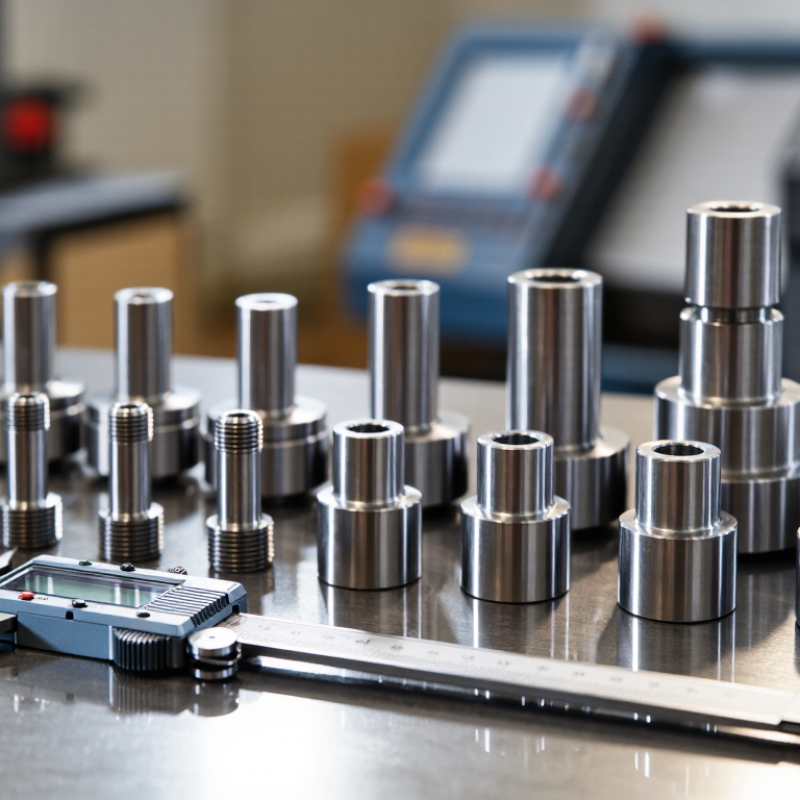
10 Best Steel Turned Parts Manufacturers for Global Buyers

Steel Turned Parts: Definition, Materials, and Common Applications

Steel turned parts are components shaped on a lathe, where a rotating steel bar meets a cutting tool. Common examples include pins, shafts, threaded studs, bushings, and valve stems. Their round geometry suits turning, while grooves, flats, or cross-holes may need additional operations. Small dimensions can matter. Fit matters. A shaft that looks smooth may still bind if its diameter or runout is out of tolerance.

Manufacturers commonly machine carbon steel, alloy steel, and stainless steel. Carbon steel is often selected for general strength and cost; alloy grades can offer greater hardness or fatigue resistance after heat treatment. Stainless steel helps where moisture or cleaning chemicals are present, though its machining behavior varies by grade. There is no universal best choice. A material that resists corrosion may be harder to cut, and protective coatings can change final dimensions.

These parts appear in automotive assemblies, industrial machinery, pumps, electrical hardware, and medical equipment. A turned pin may guide movement, while a threaded fitting joins fluid lines. Application details matter: load, temperature, exposure, and required surface finish all influence material and process selection.

Ask for dimensional inspection records on critical features. Even then, drawings sometimes omit real-world assembly conditions. That deserves a second look. They are useful, precise components, but only when design, machining, and inspection agree.

How to Assess Steel Turning Manufacturers for Global Supply

Assessing a steel turning supplier starts with evidence, not a polished capability sheet. Ask for material certificates linked to heat numbers, calibrated gauge records, and inspection results from repeat production runs. For a turned shaft, check runout, thread fit, surface finish, and burr control—not just the headline diameter. Inspect the evidence. A first-article sample is useful, but it cannot prove every batch will match.

Market conditions matter, too. The World Steel Association’s October 2024 Short Range Outlook forecast global steel demand would fall 0.9% to 1.751 billion tonnes in 2024, then rise 1.2% in 2025. This is a demand forecast, not proof of any supplier’s capacity. Still, it is a reason to ask how they secure bar stock and handle price or lead-time changes. Request a clear quote separating material, machining, finishing, and freight. Numbers can mislead.

For global supply, map the full route: raw stock, machining, any coating, export packing, and delivery. Ask for actual lead-time records and a sample shipment plan, including how parts are protected from corrosion. Box labels should match lot records, so a receiving team can trace a part without guesswork. I would still treat one point cautiously: a smooth sample run does not prove a stable production month. Ask what happens when a machine goes down or inspection finds a deviation. A specific answer is more useful than a broad promise.

10 Best Steel Turned Parts Manufacturers for Global Buyers - How to Assess Steel Turning Manufacturers for Global Supply

Use these evidence-based criteria to compare suppliers. The table is a buyer assessment guide, not a ranking of specific manufacturers; requirements should be matched to the part, industry, destination market, and purchase contract.

Assessment Dimension What to Check Useful Evidence or Reference Why It Matters for Global Supply
1. Quality management Confirm that documented controls cover order review, production, inspection, nonconformities, and corrective action. A current ISO 9001 certificate, checked against its scope, site, and certification body; request recent audit or quality-performance evidence. A working quality system helps keep processes consistent across repeat orders and production lots.
2. Steel grade and traceability Match the specified grade, condition, and applicable product standard to the drawing and purchase order; check how material lots are identified. Material test certificates and heat or batch identification. EN 10204 describes types of inspection documents for metallic products. Traceable material records support verification, investigation, and customer or regulatory documentation needs.
3. Dimensional capability Review measurement plans and actual results for critical diameters, threads, concentricity, and other drawing characteristics. Sample inspection reports, calibrated measuring equipment records, and a capability study where agreed. ISO 286-1 provides a system of limits and fits for linear sizes. Verified measurement capability reduces fit, assembly, and interchangeability risks.
4. Inspection and test methods Check that the supplier can inspect the characteristics that matter and report results in the agreed format. Inspection plans, calibrated equipment, and agreed sampling rules. ISO 2859-1 specifies acceptance sampling schemes indexed by acceptance quality limit (AQL); an AQL is not a guarantee of a defect-free lot. Clear inspection requirements make acceptance decisions more consistent between buyer and supplier.
5. Surface finish and deburring Specify surface texture, edge condition, burr limits, and any cleaning or passivation requirements on the drawing or specification. Surface-texture measurement results and agreed visual or tactile acceptance criteria; ISO 21920 is a current series covering profile surface-texture specification and assessment. Defined finish requirements help avoid sealing, wear, contamination, and assembly issues.
6. Process and equipment fit Assess whether the available turning, secondary-operation, tooling, and inspection processes suit the part geometry and production volume. Process-flow chart, equipment list, sample parts, and a production validation plan agreed before release. Process fit affects repeatability, lead time, and the need for extra operations or outsourced steps.
7. Capacity and lead-time planning Verify available capacity, stated lead times, production scheduling, and contingency plans for disruptions or demand changes. A documented production plan, order history, capacity review, and written lead-time assumptions for samples and repeat orders. Reliable planning helps buyers coordinate inventory, transport, and customer delivery commitments.
8. Packaging and export readiness Agree on corrosion protection, part separation, packaging strength, labeling, and shipping documents for the route and product. Approved packaging specification, sample pack review, carton or pallet details, and a shipping-document checklist. Suitable packaging and complete paperwork reduce transit damage, delays, and receiving errors.
9. Regulatory and environmental fit Identify applicable product, substance, and market requirements rather than assuming one certification covers every shipment. Relevant declarations or test reports for the product and destination; ISO 14001 is an environmental management system standard, not a product-compliance certificate. Requirements vary by application and destination, so verification should be specific to the order.
10. Communication and corrective action Evaluate technical response quality, change control, escalation contacts, and the process for containment and corrective action. A named contact list, documented drawing-revision control, nonconformance records, and examples of corrective-action reports with sensitive details removed. Responsive, documented communication helps resolve specification changes and quality issues across time zones.

Buyer note: Confirm certificate validity and scope with the issuer, define acceptance criteria in writing, and validate product-specific and destination-market requirements before placing a production order.

10 Best Steel Turned Parts Manufacturers for Global Buyers

Global buyers comparing the 10 best steel turned parts manufacturers should look beyond price. A precise component starts with a clear drawing, suitable steel grade, and agreed tolerances. Ask how each supplier controls bar stock, tool wear, and finished-part inspection. A shaft may look flawless yet fail if its diameter varies near a bearing seat.

Compare at least ten manufacturers using the same questions. Request material certificates, sample inspection reports, and details about measurement equipment. Check whether the supplier can explain its process in plain language, not just promise tight tolerances. Ask for a sample batch with critical dimensions marked. Small details matter. A clean thread, a smooth chamfer, and consistent packaging can prevent problems during assembly.

Global delivery adds other checks. Confirm lead times, export documents, packaging methods, and who handles quality concerns after shipment. Evaluate response speed, but verify claims with records and sample parts. Even a careful scorecard can miss a weak point; I would leave room for a trial order before committing to large volumes. That step takes time, and sometimes the results are less tidy than expected. Still, real parts reveal more than polished sales presentations.

Comparing Manufacturer Capabilities, Quality, and Export Readiness

Choosing a steel turned parts manufacturer means comparing more than machine capacity. Ask what bar diameters, steel grades, and part geometries its equipment can handle. A supplier making simple spacers may not be suited to deep-bored bushings or parts with tight concentricity requirements. Request examples of similar components, along with drawings showing critical dimensions and tolerances. Small details matter.

Quality claims should connect to a clear inspection process. Ask how operators check diameter, thread fit, surface finish, and burrs during production. A first-article report and sample measurement records can show whether the process is controlled, though they do not guarantee every shipment will match. For demanding parts, discuss inspection frequency and how out-of-spec components are handled. A polished sample can mislead. I would still check production records.

Export readiness is practical, not just a promise to ship overseas. Look for experience preparing protective packaging, clear part labels, packing lists, and commercial invoices. Steel parts can corrode during long transit, so ask whether the supplier uses suitable rust prevention and sealed packaging. Confirm expected lead times, communication hours, and how changes to drawings are documented. Responses may feel slow at first; that is worth discussing before placing a repeat order. Compare these details alongside price, because dependable delivery and consistent measurements affect the real cost.

Choosing a Supplier for Your Project’s Requirements

Choosing a steel turned parts manufacturer starts with the part, not the sales pitch. Share a clear drawing that specifies steel grade, critical dimensions, surface finish, and acceptable tolerances. A shaft with a tight bearing fit needs different process controls than a simple spacer. Ask how the supplier checks those features and whether inspection records can accompany each batch. Confirm expected order quantities, sample requirements, packaging, and delivery schedule. These details help reveal whether the supplier fits your project’s actual production needs.

Do not compare quotes on unit price alone. A lower quote may exclude tooling, secondary machining, or protective packaging. Ask for a sample part and review its measurements against the drawing before approving larger runs. Discuss how changes to material or design will be communicated. Even a careful checklist can miss a practical issue: a tolerance that is possible may still raise cost or lead time. Revisit critical requirements with your design and purchasing teams.

Tips: Send one drawing revision, mark critical dimensions, and request a written inspection plan. Ask for realistic lead times, not best-case estimates. Check how parts will be protected from scratches or rust during transit.

FAQS

What records should I request from a steel turning supplier?

Ask for material certificates linked to heat numbers, calibrated gauge records, and inspection results from repeat production runs. Check the evidence.

Is a first-article sample enough to verify quality?

No. It shows how one part was made, but cannot prove every batch will match. Request sample inspection reports and repeat-run results.

Which details should I inspect on a turned shaft?

Check runout, thread fit, surface finish, and burr control. A shaft may look fine but vary near a bearing seat.

How should I compare supplier quotations?

Request separate costs for material, machining, finishing, and freight. Ask how bar stock availability may affect price or lead time. Numbers can mislead.

What should a global delivery plan include?

Map raw stock, machining, coating, export packing, and delivery. Request actual lead-time records and a sample shipment plan.

How can I check whether parts are traceable after delivery?

Confirm that box labels match lot records. This helps receiving teams identify parts without guesswork. Small details matter.

What should I ask about production problems?

Ask what happens when a machine goes down or inspection finds a deviation. A specific answer is more useful than a broad promise.

Should I commit to large volumes after comparing suppliers?

Consider a trial order first. Real parts can reveal issues that sales presentations miss, though one trial may not show every weakness.

Conclusion

Steel Turned Parts are precision components produced by shaping steel on turning equipment, with material and design choices tailored to strength, wear resistance, corrosion exposure, and operating conditions. They are used across a wide range of industries in applications such as shafts, pins, bushings, fasteners, and other machined components. Understanding the part’s dimensions, tolerances, finish, and intended environment helps buyers define clear requirements before comparing suppliers.

For global sourcing, assess manufacturers by their machining capabilities, material control, inspection processes, production capacity, communication, and export readiness. Compare how each supplier manages quality documentation, lead times, packaging, and delivery expectations, then match these capabilities to the project’s complexity and order volume. A careful evaluation helps buyers choose a reliable manufacturing partner, balance quality and cost, and reduce the risk of delays or parts that do not meet specifications.


Sienna

Sienna

Sienna is a skilled marketing professional with a deep expertise in our company’s core products and services. With a passion for innovation and detail, she plays a pivotal role in crafting insightful blog posts that not only highlight the unique features of our offerings but also provide valuable......