2026 Top Turned Metal Parts Suppliers for Global Buyers

Time:2026-10-20 Author:Isabella
0%

Global buyers entering 2026 need more than a long supplier list. They need evidence.

Turned Metal Parts support automotive sensors, hydraulic fittings, medical instruments, and industrial automation. Each application demands different tolerances, materials, finishes, and inspection methods. A supplier producing bright stainless-steel shafts may not handle miniature brass connectors reliably. Capability must match the part.

The global manufacturing environment remains demanding. The OECD Economic Outlook, Volume 2025 Issue 1, projected moderate global growth and continued trade uncertainty. Deloitte’s 2025 Manufacturing Industry Outlook also highlighted labor shortages, supply-chain pressure, and accelerating factory digitalization. These conditions make supplier resilience a purchasing requirement, not a marketing phrase. Lead time matters. So does recovery planning.

Market research also points toward expanding computer numerical control adoption. Grand View Research identifies automation, precision production, and digitally connected equipment as major CNC machining market drivers. However, market growth alone proves little. A supplier still needs stable process control, calibrated measuring equipment, and traceable material certificates.

This 2026 guide evaluates leading Turned Metal Parts suppliers for international buyers. The comparison considers machining capacity, material range, tolerance control, surface treatment, quality certifications, communication, tooling support, and export experience. ISO 9001 certification is useful evidence, but it is not a guarantee of perfect parts. That distinction deserves attention.

Real purchasing decisions often depend on small details: a clean inspection report, protected threads, accurate packaging labels, or a supplier answering technical questions overnight. Some rankings may remain imperfect because public supplier data is incomplete. Buyers should verify current equipment, audit results, sample quality, and commercial terms before placing production orders. Reliable sourcing begins with evidence, not impressive promises.
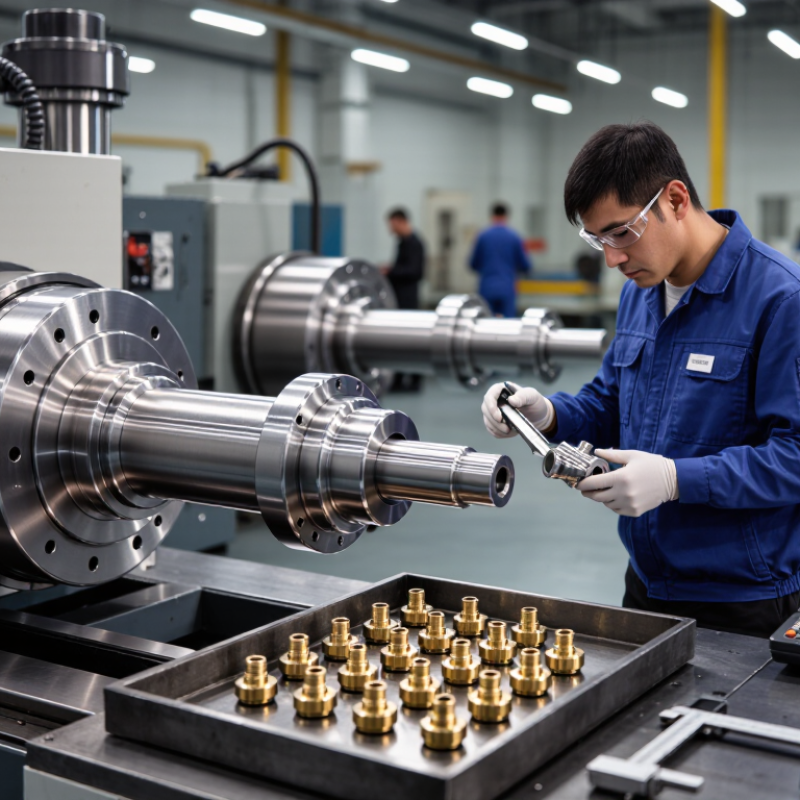
2026 Top Turned Metal Parts Suppliers for Global Buyers

What Turned Metal Parts Are and Why Global Buyers Need Them

Turned metal parts are components shaped on a lathe, where a bar rotates against a cutting tool. This process creates shafts, bushings, pins, fittings, and threaded connectors with controlled diameters. A CNC lathe can repeat these features across thousands of pieces. Small errors still matter. A slight burr can interrupt assembly or shorten service life.

Global buyers need these parts because modern equipment depends on compact, repeatable interfaces. The 2024 World Robotics report recorded 541,302 industrial robot installations worldwide in 2023.

Robots require precise joints, spacers, axles, and sensor mounts. Turned parts also support medical equipment, transport systems, energy devices, and factory machinery.

Their round geometry suits efficient production and automated inspection.

Material choice remains practical, not decorative. Stainless steel resists moisture, while aluminum reduces weight. Hardened alloy steel handles repeated loads.

Buyers should confirm drawings, tolerances, surface roughness, heat treatment, and inspection records before ordering. ISO 2768 can guide general tolerances when drawings omit specific limits.

The 2024 International Yearbook of Industrial Statistics shows manufacturing remains a major global production base, but supply decisions are not always perfect. A cheaper part may increase assembly labor, rejects, or downtime. That hidden cost deserves attention.

How to Evaluate Turned Metal Parts Suppliers in 2026

How to Evaluate Turned Metal Parts Suppliers in 2026

Choosing a turned metal parts supplier requires more than comparing hourly rates. Review their machining experience with your material, diameter range, thread type, and tolerance requirements. Ask for recent sample drawings and inspection reports. A reliable supplier should explain how they control tool wear, burrs, surface finish, and dimensional drift during long production runs.

Request material certificates and traceability records for every batch. Check whether the supplier uses calibrated micrometers, optical comparators, roundness testers, and coordinate measuring machines. Their quality plan should identify inspection points, sampling frequency, and corrective actions. Ask how rejected parts are isolated. Small details reveal serious process discipline.

Production capacity also matters. Confirm machine availability, backup equipment, operator training, and realistic lead times. A factory may promise fast delivery, yet lack enough capacity during peak seasons. That risk is easy to miss. Review packaging methods, especially for polished shafts or fine threads. Get a pilot batch before approving full production. Measure the parts independently, and compare results with the supplier’s report. Pricing still matters, but unusually low quotes can hide weak inspection, unstable materials, or repeated rework. Communication deserves a practical test. Send one technical question and observe the response time, evidence, and willingness to admit uncertainty. No supplier is flawless. The useful question is how openly they identify and correct weaknesses.

Leading Global Suppliers of Precision Turned Metal Parts

In 2026, global buyers need more than a low quotation for precision turned metal parts. Reliable suppliers combine machining experience, controlled processes, and clear communication across borders. They produce shafts, bushings, pins, inserts, and threaded components for demanding industrial applications. Material selection may include stainless steel, brass, aluminum, or engineered alloys. Each choice affects strength, corrosion resistance, cost, and cycle time.

A capable supplier should explain tolerances before production begins. Drawings need review, especially around threads, grooves, surface finishes, and difficult-to-measure features. Experienced teams use CNC turning equipment, calibrated gauges, optical inspection, and documented sampling plans. Inspection reports should identify lot numbers, measurements, material certificates, and nonconforming parts. Traceability matters when thousands of components move through several countries.

Supplier assessment should also cover packaging, lead times, export documentation, and production capacity. A factory may deliver excellent prototypes but struggle with repeated high-volume orders. That difference is often missed. No supplier is perfect. Even strong teams can face tool wear, material variation, or delayed freight. The important question is how openly they report problems and correct them. Buyers should request sample parts, process evidence, and realistic delivery schedules before approving a long-term program. Clear records build trust. Guesswork does not.

Key Manufacturing Capabilities and Quality Standards to Compare

Choosing a turned metal parts supplier requires more than comparing prices and catalog photos. Start with manufacturing capability. Check CNC turning capacity, bar diameter range, live tooling, thread accuracy, and tolerance control. A capable supplier should explain how it handles stainless steel, aluminum, brass, and difficult alloys. Ask for sample inspection reports, not promises.

Quality evidence should be specific. Look for a documented quality system, calibrated measuring equipment, and traceable material certificates. Coordinate measuring machines, optical comparators, micrometers, and surface roughness testers reveal different defects. Confirm whether the supplier records first article inspections and controls process changes. For tight tolerances, request actual data from similar parts. ISO 9001 certification can support confidence, but certification alone does not guarantee consistent production.

Production details often expose practical experience. Ask how tools are monitored after thousands of cycles, how burrs are removed, and how parts are protected during shipping. A clean sample should arrive in separated trays, with threads undamaged and surfaces free from oil stains. Useful standards may include ISO 2768, ASTM material requirements, and customer-specific inspection plans. Clarify which standard applies to each feature.

No supplier is perfect. Even experienced teams can miss a drawing note or underestimate packaging risks. A strong partner admits these weaknesses and explains corrective action. Compare response speed, inspection transparency, and engineering judgment, not only quoted cost. That comparison takes time. It prevents expensive surprises.

How to Select the Right Supplier for Your Project and Market

2026 Top Turned Metal Parts Suppliers for Global Buyers

Selecting the right turned metal parts supplier starts with your project’s real risks. Define material grade, diameter range, tolerances, surface finish, inspection needs, and annual volume. A supplier may produce excellent samples but struggle with repeatability at 100,000 pieces. Ask for process capability data, equipment lists, inspection records, and traceability examples.

The 2023 Logistics Performance Index assessed 139 economies across customs, infrastructure, tracking, and delivery reliability. Use these factors when comparing overseas suppliers. A low quotation can hide shipping delays, weak packaging, or unclear import documentation.

The ISO Survey 2022 recorded more than 1.2 million ISO 9001 certificates worldwide, but certification alone does not prove machining ability. Request recent evidence from parts similar to yours. Check whether the supplier understands your target market’s labeling, material, and documentation requirements.

Tips: Build a weighted supplier scorecard. Give quality 30%, delivery 25%, technical capability 25%, and cost 20%. Add a small pilot order before committing to full production. This approach is practical, though not perfect. Forecasts can change, and even experienced buyers sometimes overvalue a polished factory tour. Inspect first articles independently when the component is safety-critical. Keep communication measurable, with agreed tolerances, response times, corrective-action deadlines, and packaging photos. A reliable supplier should explain limitations clearly, not promise everything.

FAQS

What are turned metal parts?

They are components shaped on a lathe. A rotating metal bar meets a cutting tool. Common examples include shafts, bushings, pins, and threaded connectors.

Why do global industries use turned parts?

Their round geometry supports compact, repeatable connections. Robots, factory machines, transport systems, and medical equipment often need them.

How can a small machining error cause problems?

A slight burr may block assembly. An incorrect diameter can create movement or premature wear. Tiny errors matter.

Which materials are commonly used?

Stainless steel resists moisture. Aluminum reduces weight. Hardened alloy steel handles repeated loads. The best choice depends on use.

What information should buyers confirm before ordering?

Confirm material grade, diameters, tolerances, surface roughness, heat treatment, and inspection records. Drawings should show threads and grooves clearly.

How should buyers evaluate a supplier?

Request sample parts, equipment details, process data, and recent inspection records. Check whether prototypes can become stable, high-volume production.

Does certification prove machining ability?

No. Certification shows a documented management system, not perfect turning skills. Ask for evidence from parts similar to yours.

How can buyers compare suppliers fairly?

Use a weighted scorecard. Consider quality, delivery, technical capability, and cost. A practical split is 30%, 25%, 25%, and 20%.

Why can the lowest quotation become expensive?

Cheap parts may increase rejects, assembly labor, freight delays, or downtime. The hidden cost is easy to miss.

What quality controls are useful during production?

Use calibrated gauges, optical checks, lot numbers, material certificates, and sampling plans. Inspect first articles independently for critical components.

Conclusion

This guide provides global buyers with a practical overview of Turned Metal Parts, including their role in producing precise, durable components for automotive, industrial, electronics, medical, and other applications. It explains how turning processes create consistent dimensions, complex profiles, and reliable surface finishes while supporting both prototype development and high-volume production. Readers will also learn why material selection, tolerance control, production capacity, communication, lead times, and cost transparency are essential when comparing suppliers in 2026.

The article outlines the key manufacturing capabilities and quality standards buyers should evaluate, such as modern CNC equipment, automated inspection, traceability, documented process control, and compliance with relevant international requirements. It also offers a structured approach to supplier selection by matching technical expertise, scalability, quality performance, delivery reliability, and market-specific support with each project’s needs. By applying these criteria, companies can reduce sourcing risks, improve product consistency, and build dependable long-term manufacturing partnerships.


Isabella

Isabella

Isabella is a dedicated marketing professional with a sharp focus on driving brand growth and engagement through strategic content creation. With an extensive background in digital marketing, she combines her passion for storytelling with her keen understanding of industry trends to deliver......