In 2026, selecting a reliable supplier requires more than comparing prices. Stainless steel parts support medical equipment, food-processing lines, marine systems, and precision machinery. Their performance depends on alloy choice, tolerances, surface finish, and traceable production.
This guide reviews leading Stainless Steel Parts suppliers through practical criteria. We consider machining capability, forming experience, inspection systems, certifications, delivery consistency, and communication. A supplier may offer polished 316L fittings, laser-cut brackets, or CNC-turned shafts. Each product needs different evidence. Material certificates should match the heat number. Dimensions should be checked with calibrated tools. Welds should show consistent penetration, not merely attractive photographs.
Real projects reveal more than catalog pages. Ask how a supplier handles drawing revisions, small batches, rejected samples, and urgent replacement parts. Request inspection reports and clarify whether testing occurs in-house or through an independent laboratory. Site audits can expose crowded workspaces, weak labeling, or careful process control. Not every weakness is fatal. Some are warning signs.
This 2026 overview provides a balanced, experience-informed comparison rather than a fixed ranking. Market conditions change. Supplier strengths also vary by region, application, and order volume. A company excellent at high-volume stamping may struggle with close-tolerance prototypes. That distinction is easy to miss. Readers should verify current certifications, production capacity, and customer references before signing a contract. The best choice is not always the largest supplier. It is the one that repeatedly delivers safe, documented, and properly finished parts.
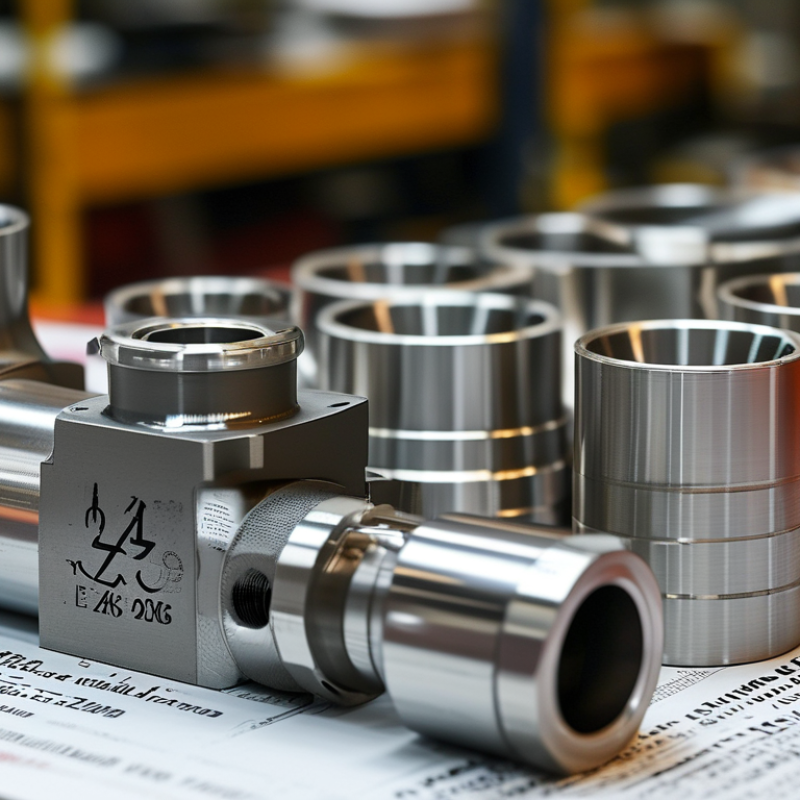
A top stainless steel parts supplier in 2026 offers more than polished quotations. They understand how grade, heat treatment, surface finish, and machining methods affect real performance. In my experience, small material choices can change corrosion resistance, fatigue life, and assembly accuracy. Details matter.
Reliable suppliers provide full material traceability, from heat certificates to inspection records. They should explain dimensional tolerances in practical terms, not hide behind technical language. Coordinate measuring machines, surface roughness tests, and visual inspections support consistent production. Independent testing may also be necessary for safety-critical parts. Clear evidence builds trust.
Responsiveness defines quality, too. A capable supplier asks about load, environment, production volume, and installation conditions before recommending a process. They report problems early. They do not promise impossible delivery dates. No supplier gets every forecast right. That deserves honesty. I would also review sample parts, corrective-action reports, and packaging methods before approving a long-term order. Some suppliers look efficient until a minor drawing revision causes confusion. That is a warning sign.
The strongest suppliers combine experienced engineers with disciplined quality systems. They can support prototypes, pilot batches, and repeat production without losing control. Their records should show who inspected each part and when. Communication remains important. A technically excellent supplier can still fail when updates arrive late or questions remain unanswered. In 2026, reliability means measurable quality, practical experience, transparent communication, and the humility to improve after mistakes.
Practical benchmark framework for evaluating stainless steel parts suppliers. The figures below reflect commonly used engineering, quality, traceability, and commercial requirements; actual limits should be confirmed against the part drawing, material standard, and end-use regulations.
| Evaluation Dimension | Top-Supplier Benchmark | Verification Evidence | Suggested Weight |
|---|---|---|---|
| Material Capability | Supports commonly specified grades such as 304/304L, 316/316L, 17-4 PH, 15-5 PH, 410, and 430, subject to process suitability. | Material certificates compliant with the applicable ASTM, EN, or equivalent specification; heat number traceability; chemical composition and mechanical-property records. | 15% |
| Manufacturing Process Range | Provides an appropriate combination of CNC machining, turning, milling, sheet-metal fabrication, stamping, casting, forging, or additive manufacturing. | Process capability matrix, equipment list, sample parts, process-flow documentation, and documented subcontractor controls where external processing is used. | 10% |
| Dimensional Accuracy | Achieves drawing-defined tolerances consistently; precision CNC work commonly targets approximately ±0.01–0.05 mm when geometry, material, and process conditions allow. | First-article inspection reports, capability studies, calibrated inspection records, and measurement-system analysis for critical characteristics. | 15% |
| Surface Finish | Offers controlled finishes such as machined, brushed, bead-blasted, electropolished, passivated, or mirror-polished surfaces. Roughness requirements should be stated as Ra values. | Surface-roughness readings, approved limit samples, finishing specifications, process-control plans, and inspection records for cosmetic or sealing surfaces. | 8% |
| Corrosion Resistance | Matches the stainless steel grade and post-processing method to the service environment, including chloride exposure, humidity, chemicals, temperature, and cleaning agents. | Grade selection rationale, passivation or electropolishing records, corrosion-test results where required, and documented cleaning and handling procedures. | 10% |
| Quality Management | Operates a documented quality management system aligned with ISO 9001 or an equivalent recognized standard. | Current certificate, scope of certification, internal-audit records, corrective-action process, nonconformance reports, and supplier-quality procedures. | 10% |
| Industry Compliance | Can meet additional requirements for regulated applications such as medical, food-contact, automotive, aerospace, or pressure equipment markets when applicable. | Relevant approvals, material declarations, restricted-substance statements, process validations, cleanliness records, and applicable regulatory documentation. | 8% |
| Traceability | Maintains traceability from incoming material through production, inspection, finishing, packaging, and shipment. | Heat or lot numbers, traveler records, inspection reports, batch identification, certificate-of-conformance documentation, and retention policy. | 8% |
| Prototype-to-Production Scalability | Provides a controlled transition from prototype quantities to repeat production without losing dimensional, material, or finish consistency. | Design-for-manufacturing feedback, pilot-run reports, production-capacity plan, tooling strategy, process-validation records, and change-control procedures. | 7% |
| Lead-Time Reliability | Provides a clearly defined schedule for quotation, engineering review, sampling, production, inspection, and delivery, with proactive delay communication. | Quotation response history, on-time-delivery data, production planning procedure, capacity statement, and documented escalation process. | 5% |
| Inspection Infrastructure | Uses calibrated equipment appropriate to the part, including CMMs, optical measurement, height gauges, micrometers, gauges, and surface-finish instruments. | Equipment calibration certificates, inspection-plan templates, gauge lists, sample dimensional reports, and records showing calibration status. | 7% |
| Commercial Transparency | Quotes clearly identify material, process, finish, tooling, inspection, packaging, shipping terms, minimum order quantities, and validity period. | Itemized quotation, assumptions and exclusions, revision history, payment terms, packaging specification, and clearly defined change-order rules. | 5% |
| Sustainability and Resource Control | Demonstrates responsible control of scrap, cutting fluids, wastewater, energy use, packaging, and recycled stainless steel streams where relevant. | Environmental policy, waste-disposal records, recycling documentation, energy or emissions data where available, and compliance statements for applicable regulations. | 5% |
| Technical Communication | Responds with technically accurate questions and recommendations regarding tolerances, weld design, finish, material condition, inspection, and manufacturability. | Engineering-review records, clarification logs, drawing-markup examples, design-for-manufacturing feedback, and documented corrective-action communication. | 7% |
Traceability links each finished part to its raw material batch. Request heat numbers, mill certificates, and complete production records. This helps identify grade errors quickly.
Check cutting, CNC machining, bending, welding, and surface finishing equipment. Ask for tolerance data and sample inspection reports. Look for controls against burrs, distortion, discoloration, and poor passivation.
Request documented inspection procedures and calibrated measuring equipment. Review first-article inspection results for critical dimensions. Certifications help, but daily discipline matters more.
Ask which grades the supplier processes regularly. Confirm the required grade against your drawing and service conditions. Grade confusion can cause costly failures.
A trial order reveals real production behavior. Compare dimensions, surface quality, response speed, packaging, and batch consistency. It may feel slower, but it exposes hidden problems.
Ask about current capacity, peak-demand planning, tooling, and realistic lead times. Confirm delivery milestones before production begins. Fast promises are not always reliable.
Request protective film, clean separators, and moisture-resistant packaging. These details reduce scratches, staining, and contact marks during transport. Packaging is easy to overlook.
No. Compare material yield, finishing, inspection, tooling, packaging, and logistics costs. A low quotation may create expensive delays later. I might overvalue price sometimes, too.
In 2026, a top Stainless Steel Parts supplier is defined by more than product availability. Reliable suppliers combine advanced manufacturing capabilities, consistent material quality, precise tolerances, strong production controls, and responsive technical support. When evaluating manufacturers, buyers should examine experience with the required stainless steel grades, machining or forming processes, inspection procedures, production capacity, and ability to handle prototypes as well as large orders. Certifications, traceability, sustainability practices, and compliance with project-specific standards are also important indicators of long-term reliability.
The global market includes specialized manufacturers, regional production partners, and large-scale suppliers serving international customers. To compare options effectively, assess total pricing rather than unit cost alone, while considering tooling, shipping, quality testing, and potential delays. Lead times should be supported by realistic capacity plans and clear communication. The best supplier for a project will offer the right balance of quality, cost, delivery performance, certifications, customization, and after-sales support. A structured comparison process helps buyers reduce risk and build a dependable supply relationship.

 Jifeilong