Choosing the right Guide Shaft begins with the machine’s real working conditions, not a supplier’s product label. In 2026, buyers will compare solid shafts, hollow shafts, supported shafts, and corrosion-resistant options. Each type solves a different problem. Load matters. So does speed. Installation space matters too.
“Guide shaft selection is a balance between stiffness, surface life, alignment, and maintenance,” says Michael Chen, a senior precision-motion engineer with more than 18 years of industrial design experience. His point is practical. A hardened solid shaft may suit compact linear assemblies with high radial loads. A hollow shaft can reduce moving mass, although its stiffness must be checked carefully. Supported guide shafts can limit bending across longer spans. Stainless designs may perform better in washdown areas, but surface finish and sealing still deserve attention.
Look closely at the details.
A buyer should inspect diameter tolerance, straightness, hardness, roundness, and available mounting methods. A shaft that looks polished may still create friction if alignment is poor. That is an easy mistake. Temperature changes, contamination, and repeated shock can also alter service life. Product catalogs rarely show the complete story.
This guide will examine the leading Guide Shaft types expected to attract buyers in 2026. It will connect material choice with actual equipment needs, from packaging lines to robotic slides. Some recommendations will remain conditional. That is honest engineering. The best choice depends on evidence, not trend-driven specifications.
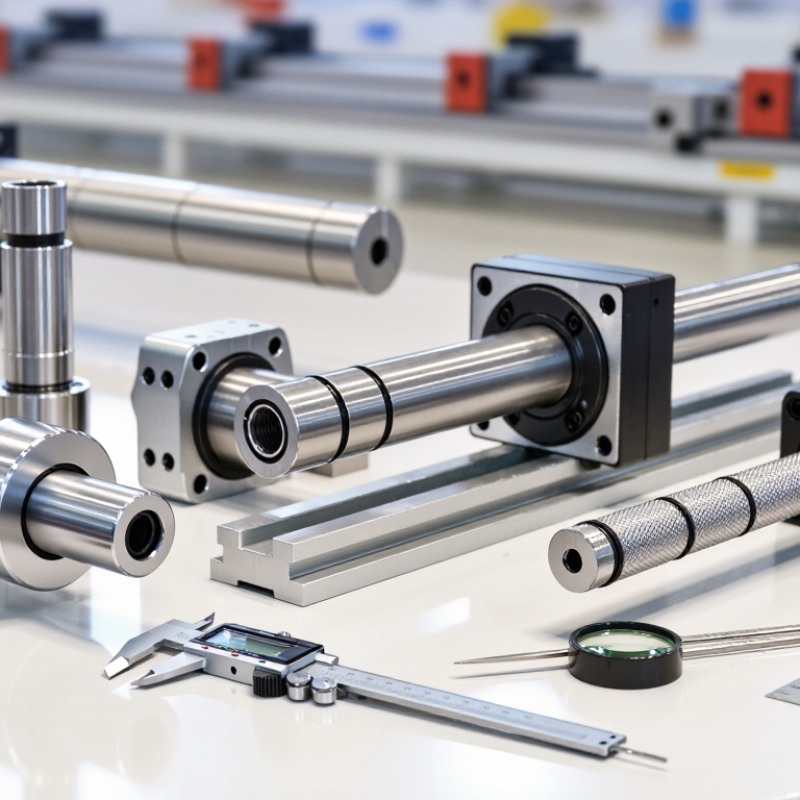
What Are the 2026 Top Guide Shaft Types for Buyers?
Guide shafts are precision components that control linear movement, reduce vibration, and keep loads aligned. They matter more in 2026 because factories demand faster cycles, cleaner operation, and less unplanned maintenance. The International Federation of Robotics recorded 541,302 industrial robot installations worldwide in 2023. That figure signals stronger demand for reliable motion hardware.
Hardened and ground guide shafts remain a practical choice for high-load applications. Their polished surfaces support smooth bushing travel and stable dimensional accuracy. Stainless steel shafts suit washdown areas and humid production rooms. Hollow shafts reduce weight, although their stiffness must be checked carefully. Supported shafts help prevent bending across longer spans. Spline shafts add torque transmission when rotation and linear travel occur together.
Buyers should compare hardness, straightness, surface finish, shaft diameter, and corrosion resistance. ISO 286 fits and ISO 1101 geometrical tolerances provide useful inspection references. A shaft can look perfect yet fail through poor support spacing. Small alignment errors become visible as noise, heat, and uneven wear. I often see hardness valued above installation accuracy. That is a mistake worth reconsidering. The IFR World Robotics 2024 report also shows how rapidly automated equipment is expanding, increasing the cost of weak component choices. Check operating loads, travel speed, lubrication, cleaning chemicals, and expected service hours before selecting a guide shaft type.
| Guide Shaft Type | Typical Construction | Primary Applications | Key Performance Characteristics | Main Advantages | Potential Limitations | Best Buyer Priority |
|---|---|---|---|---|---|---|
| Hardened and Ground Linear Shaft | Carbon or alloy steel with a hardened outer surface and precision-ground diameter; commonly used with linear bearings or bushings. | Linear actuators, automation equipment, packaging machinery, pick-and-place systems, and material-handling equipment. | High surface hardness, consistent diameter, good wear resistance, and dependable straight-line guidance. | Strong balance of precision, durability, availability, and cost for general-purpose motion systems. | Requires accurate support and alignment; unsupported long spans may deflect under load. | General industrial use, repeatable motion, and long service life. |
| Supported Linear Shaft | A hardened shaft mounted along its length on an aluminum or steel support rail. | Long-stroke automation axes, robotic transfer units, inspection systems, and applications with limited shaft diameter. | Higher resistance to bending than an unsupported shaft; suitable for longer travel and heavier loads. | Improves stiffness without requiring an excessively large shaft diameter. | Support rails increase assembly size, cost, and installation requirements. | Long travel, high stiffness, and reduced deflection. |
| Precision Guide Post | Hardened steel post, usually paired with a guide bushing, often with a shoulder, flange, or mounting feature. | Press tooling, stamping dies, injection molds, forming equipment, and repeatable die alignment. | Accurate axial alignment, high load capacity, and resistance to impact during repeated tool cycles. | Provides reliable mold or die registration and is available in compact, robust designs. | Primarily intended for guided vertical or reciprocating assemblies rather than long continuous travel. | Tooling accuracy, repeatability, and impact resistance. |
| Cylindrical Guide Pillar | Precision cylindrical pillar manufactured from hardened tool steel or other wear-resistant steel grades. | Plastic injection molds, die sets, precision fixtures, and multi-plate tooling. | Stable alignment between plates, good resistance to wear, and dependable concentric guidance. | Well suited to repeated opening and closing cycles in tooling assemblies. | Needs compatible bushings and careful lubrication or maintenance in high-cycle environments. | High-cycle tooling and accurate plate alignment. |
| Ball-Bearing Guide Shaft | Precision shaft used with recirculating or non-recirculating ball bushings. | Automatic machinery, CNC auxiliary axes, laboratory equipment, 3D positioning systems, and light-to-medium load motion. | Low rolling friction, smooth movement, and suitable performance at relatively high travel speeds. | Efficient motion with low drive-force requirements and repeatable positioning. | Sensitive to contamination, shock loads, poor alignment, and inadequate shaft hardness. | Low friction, speed, and smooth automated movement. |
| Plain-Bearing Guide Shaft | Precision shaft paired with a polymer, bronze, composite, or other sliding bushing. | Dirty or dusty environments, low-speed mechanisms, compact machines, and applications where low maintenance is important. | Sliding contact, quiet operation, good tolerance of contamination, and suitability for oscillating movement. | Simple design, low noise, and reduced sensitivity to particles compared with rolling-element systems. | Generally higher friction and possible wear than a properly lubricated ball-bearing arrangement. | Quiet operation, contamination tolerance, and simple maintenance. |
| Stainless Steel Guide Shaft | Corrosion-resistant stainless steel, available with polished, ground, or hardened surfaces depending on the application. | Food-processing equipment, washdown machinery, medical devices, chemical handling systems, and outdoor equipment. | Improved corrosion resistance, cleanable surfaces, and compatibility with humid or washdown conditions. | Supports hygienic designs and reduces corrosion-related maintenance. | Material grade and surface hardness must be matched to the bearing; some stainless grades are less wear-resistant than hardened tool steel. | Corrosion resistance, hygiene, and frequent cleaning. |
| Hollow Guide Shaft | Tubular or internally bored shaft made from steel, stainless steel, or aluminum-based construction. | Weight-sensitive automation, robotic equipment, cable-routing assemblies, and shafts requiring internal fluid or wiring passages. | Lower mass than a solid shaft of comparable outside dimensions; may provide useful bending stiffness when correctly designed. | Reduces moving mass and allows cables, sensors, or air lines to pass through the shaft. | Load capacity, torsional strength, and wall thickness must be checked carefully; unsuitable designs can deform or buckle. | Low moving weight and integrated routing of utilities. |
| Flanged Guide Shaft | Guide shaft with an integral or attached flange for axial positioning and simplified mounting. | Compact linear mechanisms, assembly fixtures, small presses, indexing units, and modular automation frames. | Positive axial location, convenient installation, and good resistance to shaft movement within the housing. | Reduces the need for separate retaining hardware and can simplify machine assembly. | Flange dimensions may restrict installation space and can introduce local stress if improperly supported. | Fast installation, axial retention, and compact assemblies. |
| Telescopic Guide Shaft | Multiple nested shafts or guide members that extend and retract through a compact envelope. | Extendable tooling, access mechanisms, lifting devices, service platforms, and space-limited linear systems. | Provides extended reach from a short retracted length; performance depends on stage stiffness and guidance design. | Useful where available installation length is shorter than the required operating stroke. | More components, higher cost, greater sensitivity to side loads, and more demanding maintenance. | Compact storage length and extended reach. |
| Roller Guide Shaft | Precision shaft or rail used with rollers, cam followers, or roller-bearing guide elements. | High-load transfer equipment, indexing systems, industrial doors, conveyors, and heavy automation. | High load capacity and good shock-load tolerance when the roller profile and contact geometry are correctly selected. | Handles heavier loads and certain impact conditions better than many lightweight sliding systems. | Requires correct preload, alignment, contact geometry, and protection from contamination. | Heavy loads, rigidity, and impact resistance. |
Buyer note: Select a guide shaft by checking load direction, stroke length, speed, acceleration, allowable deflection, environment, shaft hardness, bearing compatibility, lubrication requirements, alignment accuracy, and expected duty cycle. The shaft diameter alone does not determine system capacity; the support arrangement and bearing interface are equally important.
Buyers can choose solid, hollow, splined, stepped, stainless, miniature, and supported shafts. Each type solves a different motion problem.
Choose a hardened solid shaft for heavy radial loads or long unsupported spans. Its polished surface supports smooth, repeatable travel. It is not always the lightest choice.
Hollow shafts reduce moving mass and may improve acceleration. Check wall thickness and midpoint deflection carefully. They can lose stiffness under heavy radial loads.
Splined shafts guide motion while transmitting torque in indexing or vertical equipment. Stepped shafts combine diameters, shoulders, and threaded ends. They can simplify bearing and seal installation.
Corrosion-resistant shafts suit humid rooms, washdown areas, and food-processing equipment. Check exposure to cleaning chemicals and temperature changes. Material choice alone cannot fix poor maintenance.
Record peak load, stroke, speed, temperature, contamination, and maintenance access. Measure unsupported length and check deflection near the midpoint. A 500-millimeter span deserves special attention.
Misalignment can shorten service life faster than a moderate overload. Check mounting tolerance, bearing alignment, and thermal expansion. Small errors matter.
Yes, test one assembly under realistic vibration, shock, and cleaning conditions. Catalogue values may not match actual installation errors. I would not skip this step.
In 2026, a Guide Shaft remains an essential mechanical component for supporting, aligning, and controlling the movement of parts in equipment and production systems. Buyers can choose from several types, including linear guide shafts, precision-ground shafts, hardened shafts, hollow shafts, and corrosion-resistant options. Each type offers different advantages in load capacity, dimensional accuracy, surface durability, weight, and operating efficiency. Understanding these differences helps buyers select a solution that balances performance, service life, and budget.
When comparing Guide Shaft options, buyers should evaluate material composition, shaft diameter, surface finish, hardness, straightness, tolerance, mounting method, and environmental conditions. Precision types may suit automation and high-accuracy motion systems, while hardened or corrosion-resistant designs may be better for demanding industrial environments. The best choice depends on the application’s load, speed, travel distance, maintenance needs, exposure to moisture or contaminants, and available installation space. A careful review of technical requirements ensures reliable operation and long-term value.

 Jifeilong